
Context
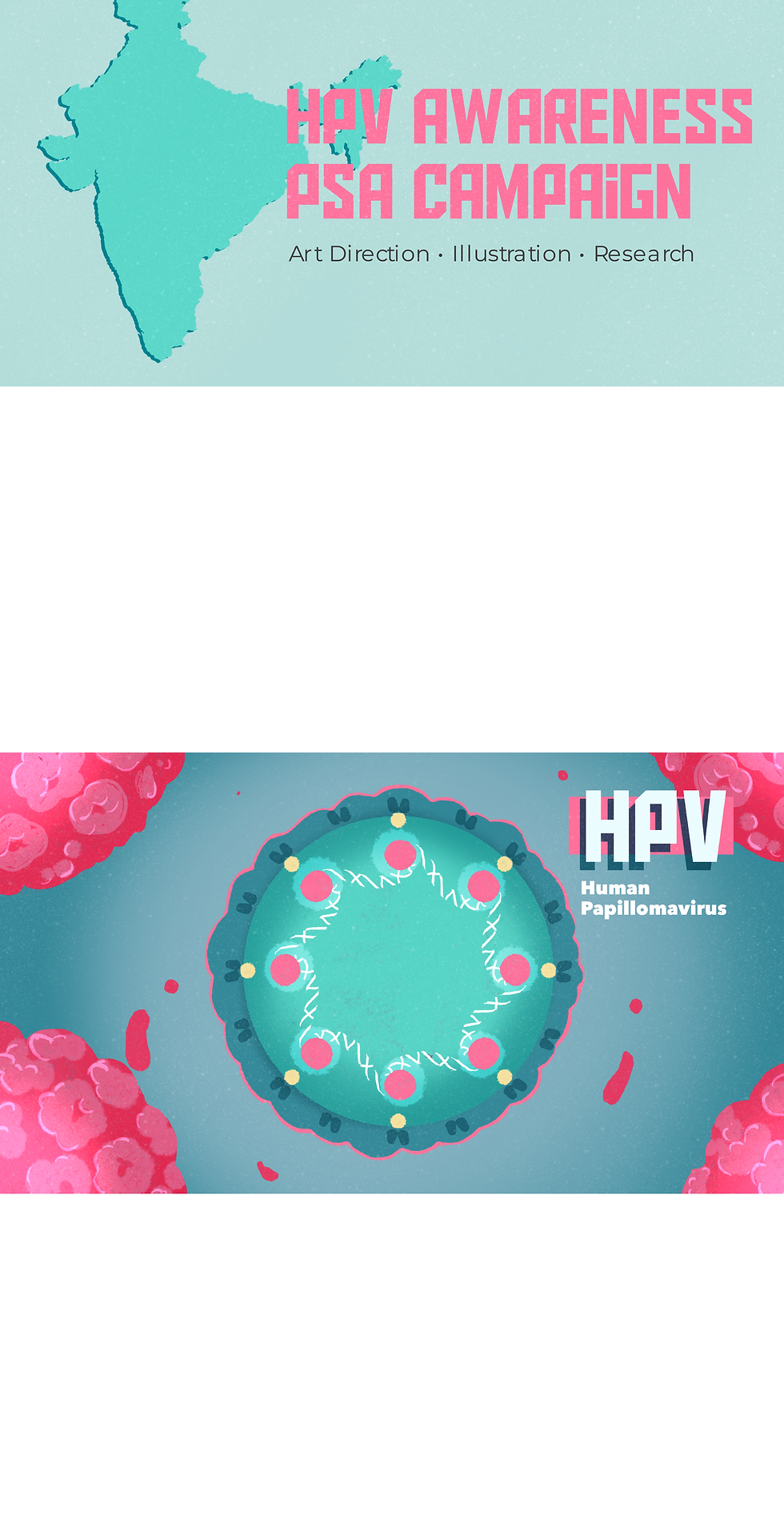
Cervical cancer is one of the leading causes of cancer-related deaths among women in India. Research shows that persistent infection with high-risk strains of HPV (Human Papillomavirus) is the necessary causal factor in almost all cervical cancers (WHO). Despite this, awareness of HPV and preventive vaccination remains extremely low in India across both rural and urban populations.This animated PSA was created to raise awareness about HPV, demystify the virus visually, and promote early prevention and screening, especially in communities with limited access to health education. This film was part of the two film collaboration with capedindia.
Project Goals
-
Explain what HPV is and how it is linked to cervical cancer.
-
Make complex medical information simple, friendly, and non-intimidating.
-
Create visuals that resonate with rural audiences and support low-literacy comprehension.
-
Encourage families to initiate conversations about prevention and screening.
Research & Creative Development
Understanding the Virus To represent HPV accurately yet non-threateningly, I researched:
-
Medical cross-sections of the virus
-
How different HPV strains are visualised in scientific sources
-
How public health agencies simplify explanations for lay audiences
From WHO and epidemiological studies, I learned:
-
HPV is extremely common and spreads through skin-to-skin contact.
-
High-risk HPV types are responsible for virtually all cervical cancers.
-
Visual metaphors and soft representations improve comprehension and reduce stigma.
-
This informed the decision to depict the virus as a rounded, colourful, symbolic shape, retaining recognisable structural rings without clinical harshness.
Understanding the Audience
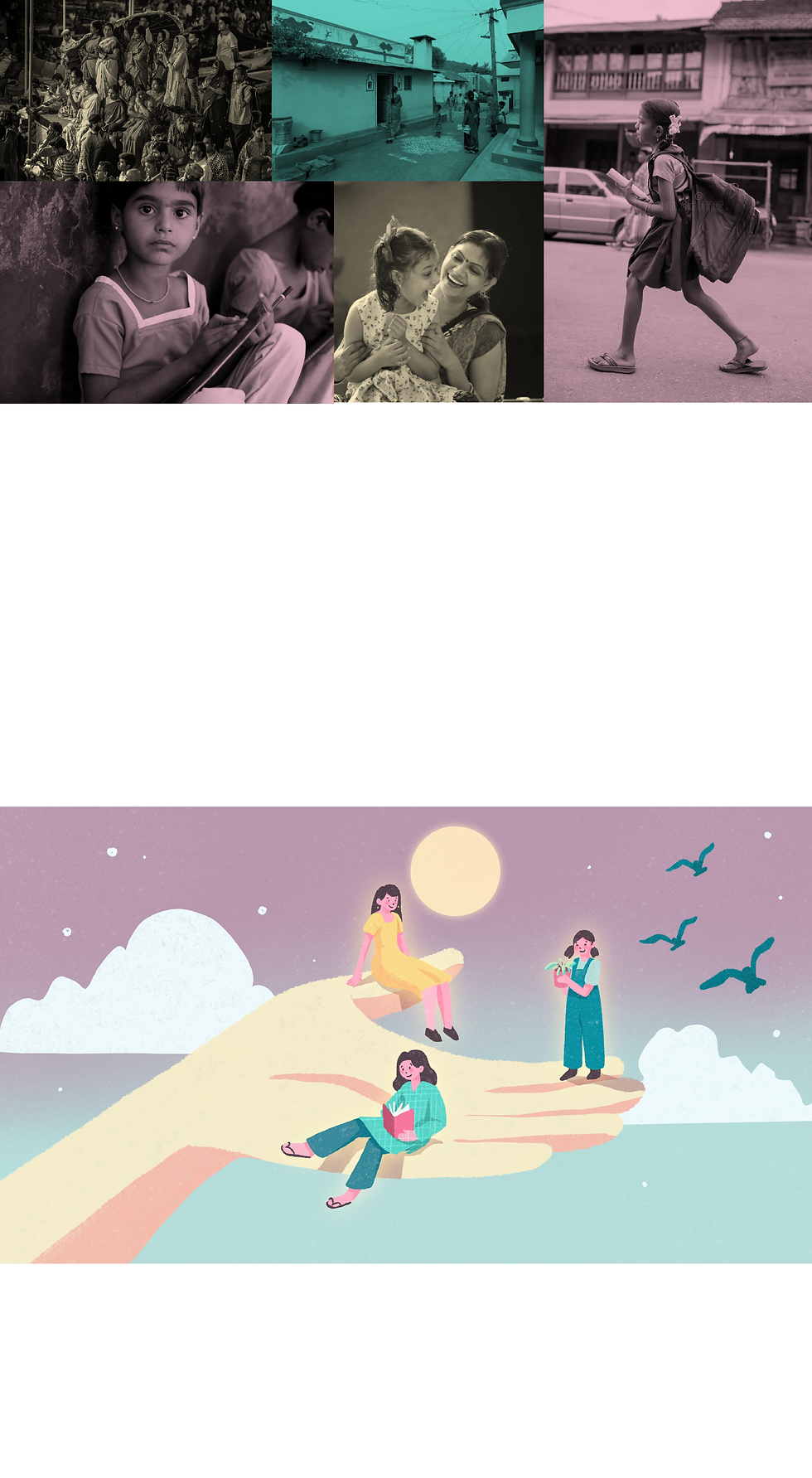
My research on rural communication in India highlighted:
-
dependence on visual storytelling over text
-
strong connection to symbolic imagery and community values
-
discomfort with explicit medical imagery/ real pictures
-
limited prior knowledge about HPV
This shaped several creative choices:
-
Pastel colour palettes to reduce clinical anxiety
-
Soft, illustrated characters representing real families
-
Minimal text and clear movement to aid comprehension
-
Warm, culturally relevant characters so the audience can relate to them.
Visual style and storytelling
The film blends:
-
illustrations that are relateable, comforting but still feel ‘urgent’
-
scenes showing women supported by family and community
-
This approach makes the information feel non-judgmental, accessible, and emotionally grounded.
-
gentle animation
Impact
-
When shared with rural health workers and community groups, the film sparked conversations about cervical cancer and prompted requests for more accessible health education content. Its simple visuals made it especially effective in low-literacy settings.
-
We also made sure the film was translated in regional languages for maximum outreach.
What I Learnt
While distributing the PSA, I realised that HPV awareness is low not only in rural areas but also among urban and semi-urban families, including my own. This revealed how widespread the silence around women’s health still is and reinforced the importance of inclusive, culturally sensitive communication.
The project deepened my understanding of social innovation as work that informs, shifts norms, and empowers communities and motivated me to do more projects in this sector.
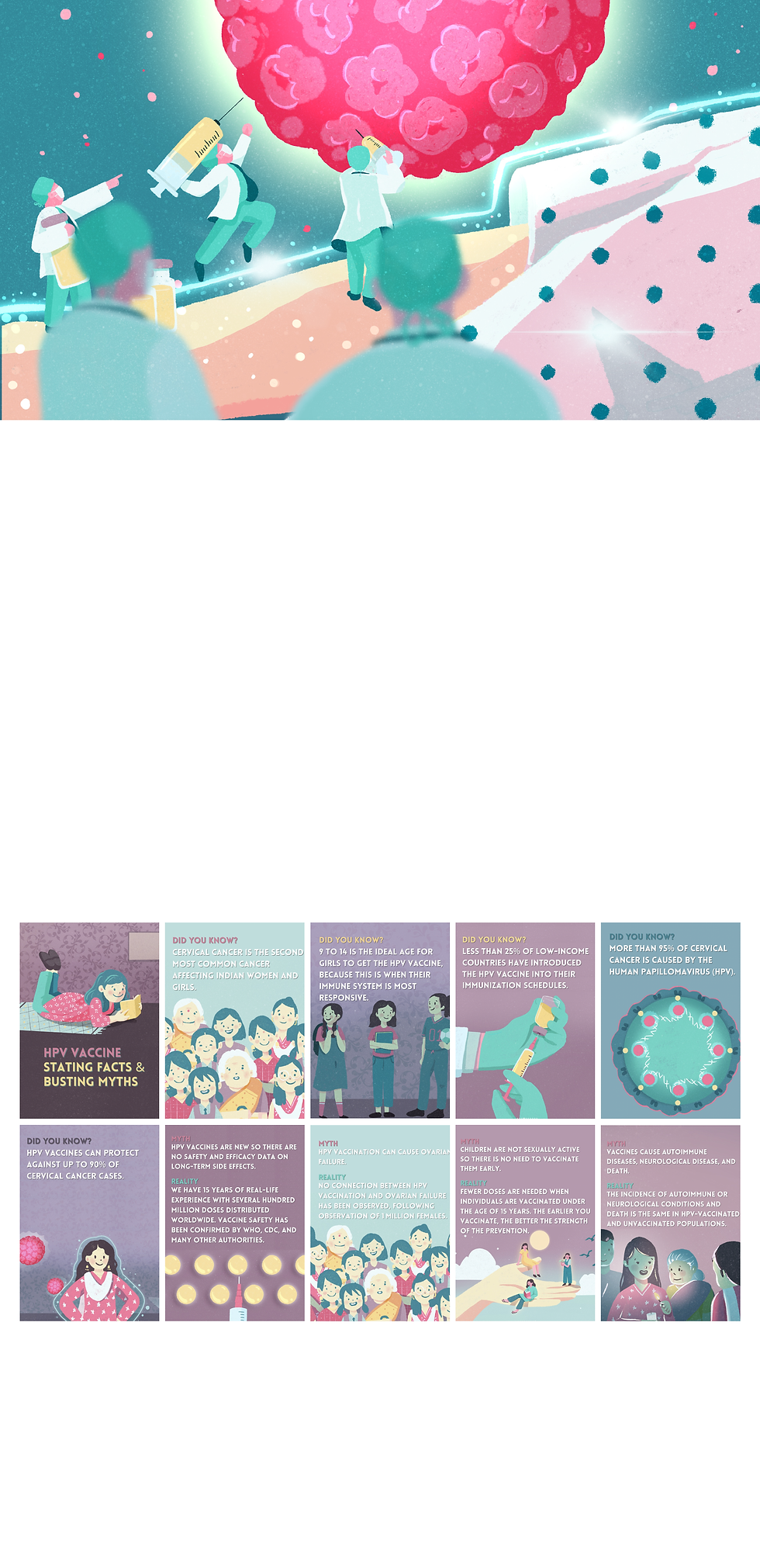
Social Media Infographics
Sources: @unicef , @nlm_collections National Center for Biotechnology Information, @icmrorganisation – National Institute of Cancer Prevention and Research